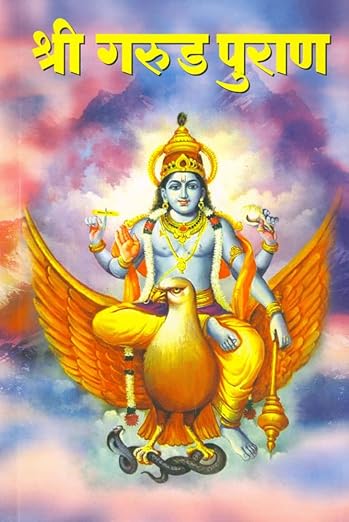

A thought-provoking article titled “Physics of Transition” explores the deeper philosophical meaning of the Garud Puran, challenging the popular belief that it focuses solely on life after death. Instead, the article emphasizes that the ancient text is a profound reflection on consciousness, transition, and the importance of mindful living before death.
Drawing parallels between Indic wisdom and modern science, the writers explain that death is not merely an end, but a transition — much like shifts observed in physics and biology. Modern neuroscience supports the idea that identity and memory persist through dynamic neural networks, while epigenetics shows how experiences shape biological expression. In this light, karma is interpreted not as mystical accounting, but as patterned continuity.
The article further suggests that the post-death phase described in Garud Puran symbolizes a psychological and spiritual reorganization rather than an external realm of reward or punishment. Rituals like shraddh and pindadan are viewed as social and emotional processes that help individuals process grief and attain closure.
Ultimately, the core message highlights self-awareness as liberation. Conscious observation of one’s desires, fears, and attachments leads to freedom. The article concludes that the true teaching of Garud Puran is about awakening and living attentively in the present moment.